

USU–UPM Modernize Livestock Feed Management for Simalungun Farmers
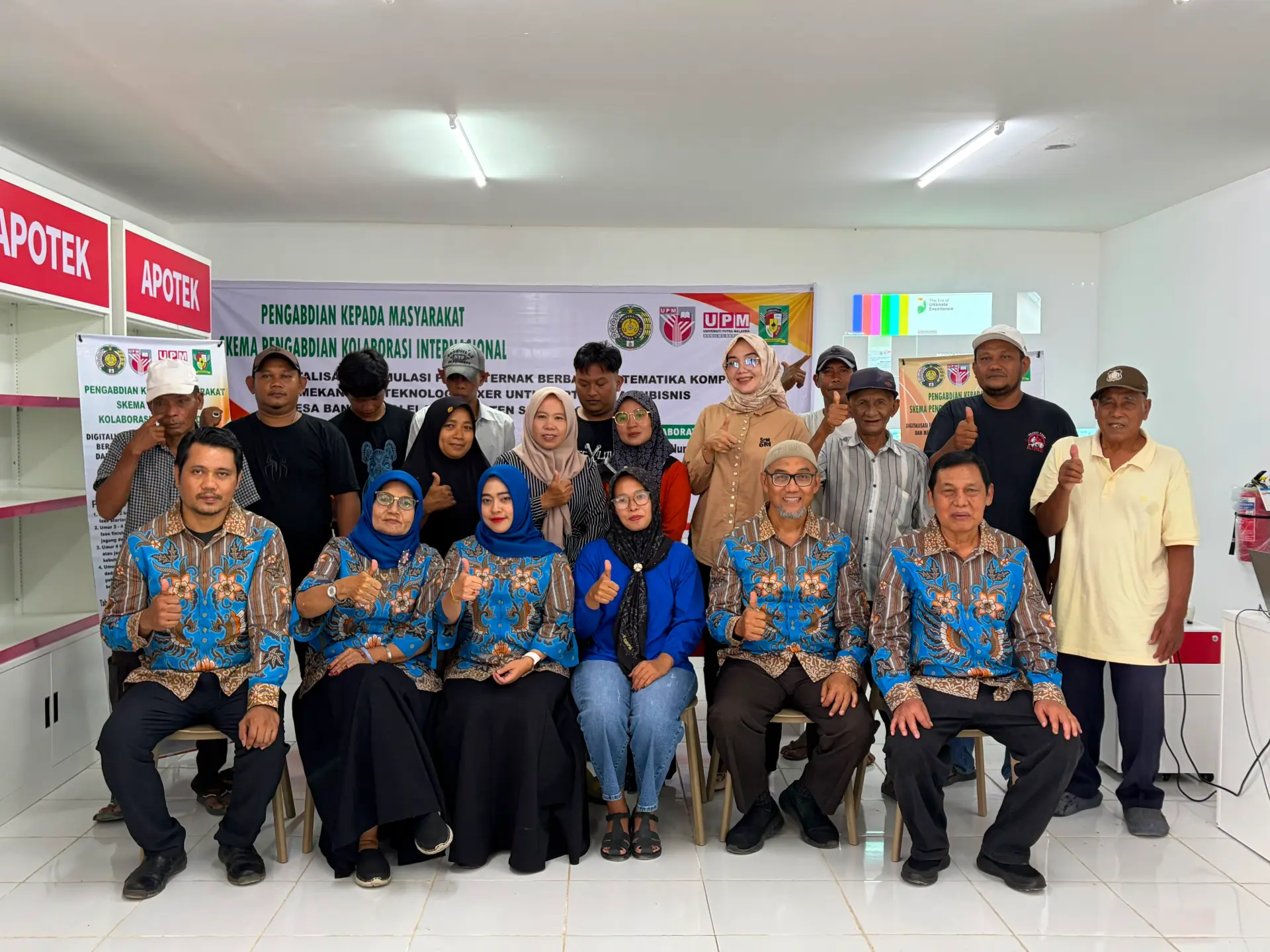


USU–UPM Modernize Livestock Feed Management for Simalungun Farmers
Published by
Raisha Andini
Published at
Wednesday, 12 August 2026


MEDAN – HUMAS USU: The Universitas Sumatera Utara (USU) Community Service Team under the International Collaboration Scheme, in collaboration with academics from Universiti Putra Malaysia (UPM), is promoting the modernization of livestock feed management among farmers in Bandar Malela Village, Gunung Maligas District, Simalungun Regency. The program introduces digital feed formulation technology and a feed mixer machine to improve cost efficiency and livestock productivity.
The program, led by Prof. Dr. Tulus, Vor.Dipl.Math., M.Si., Ph.D. of the Faculty of Mathematics and Natural Sciences (FMIPA) USU, involves a multidisciplinary team comprising Dr. Amlys Syahputra Silalahi, S.E., M.Si. in Management Economics; Ir. Peni Patriani, S.Pt., M.P., IPM, ASEAN Eng. in Animal Science; Helova Leonard Panjaitan, S.P., M.P. in Agribusiness; and Ir. Suprianto, S.T., M.T., Ph.D. in Mechanical Engineering. The academic collaboration was further strengthened by Assoc. Prof. Ir. Dr. Nuraini Abdul Aziz from UPM and Ir. Tati Vidiana Sari, S.Pt., M.P., IPM as resource persons.
Before the program was implemented, farmers still relied on conventional methods for formulating livestock feed, including trial-and-error approaches. The mixing process was also carried out manually using shovels. These conditions resulted in suboptimal feed compositions and non-uniform mixing, affecting cost efficiency and leading to inconsistent livestock growth.
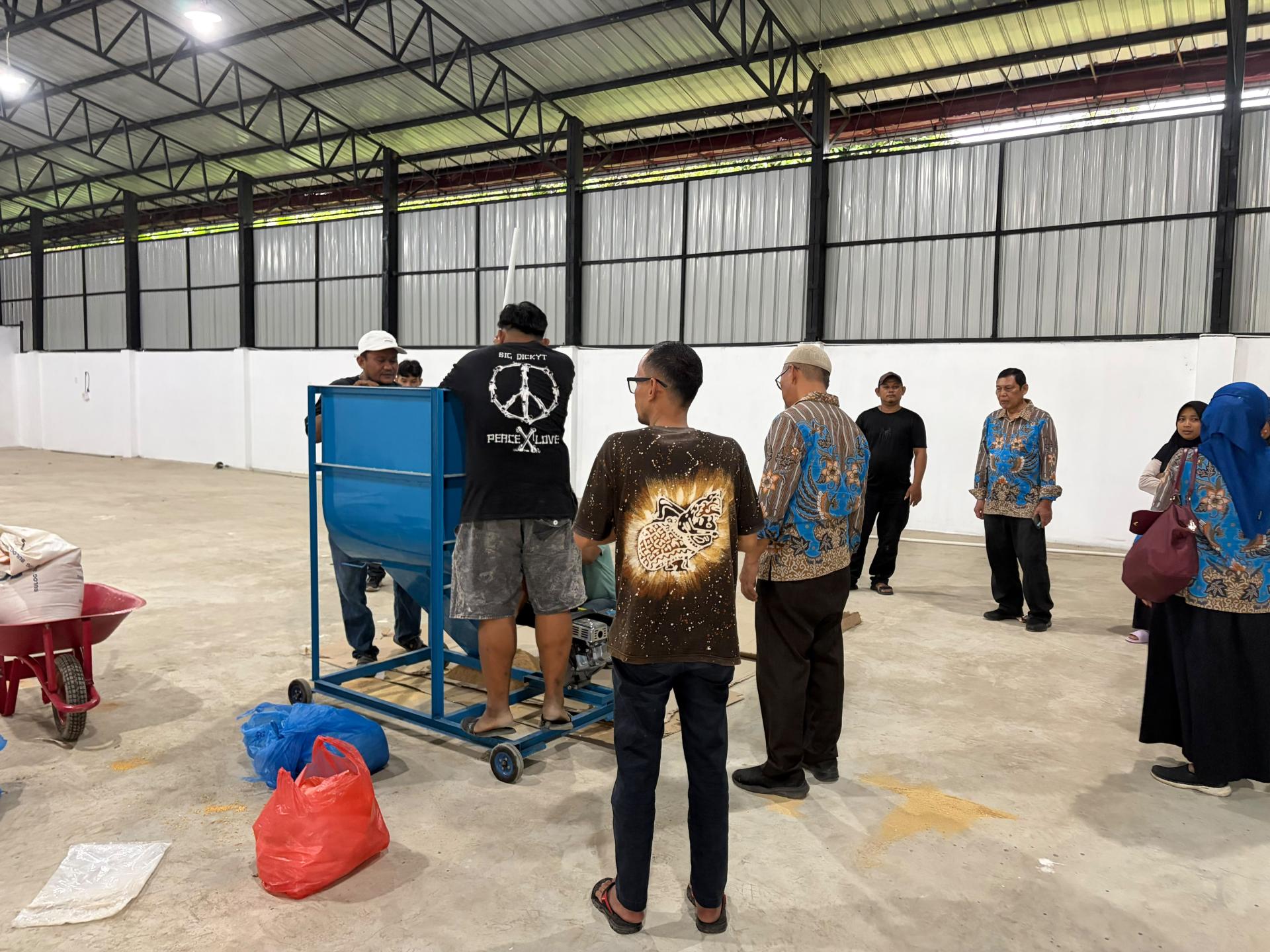
To address these challenges, the community service team introduced two key innovations. First, the Feed Smart application helps farmers calculate feed ingredient compositions while estimating feed requirements and cost efficiency. Second, a feed mixer machine enables the mixing process to be carried out more quickly, homogenously, and hygienically.
Evaluation results showed that the technology adoption rate reached 88 percent. The participating farmers were able to formulate feed using the digital application and operate the mixing machine independently.
The application of these technologies also creates opportunities for greater economic efficiency through the use of locally available feed ingredients, thereby reducing dependence on commercial feed. More precise formulations and homogeneous mixing also support more consistent livestock weight gain.
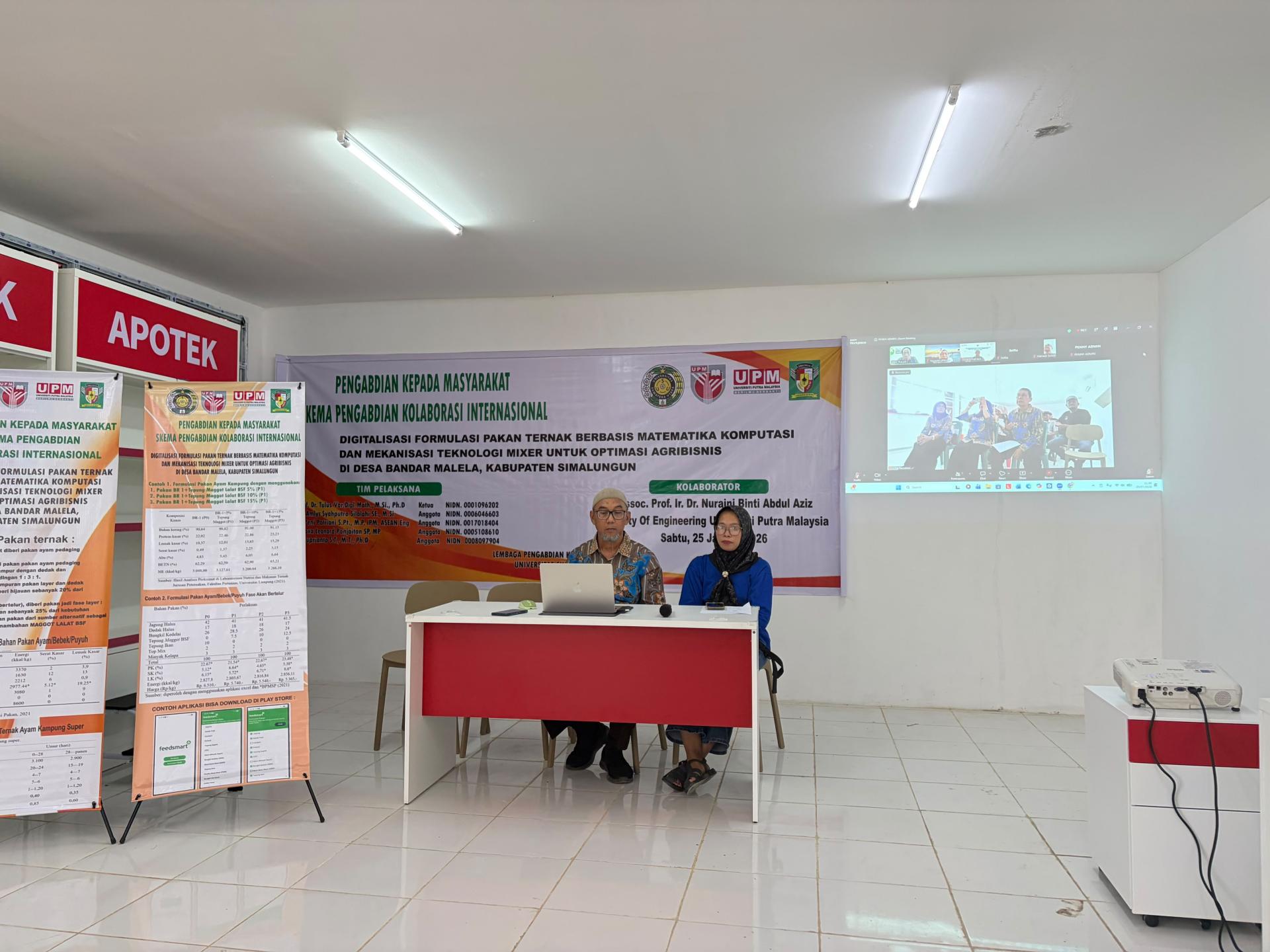
Prof. Tulus said the program was not solely focused on technology transfer but also on building farmers’ capacity so they can manage their livestock businesses more independently and sustainably.
“This program integrates the strengthening of hard skills and soft skills, as well as the utilization of agricultural waste, so that farmers are not only able to use technology but can also manage their livestock businesses more efficiently,” said Prof. Tulus.
According to him, the collaboration between USU and UPM demonstrates how international university partnerships can be translated into concrete solutions for communities, particularly in improving the productivity and economic resilience of livestock farmers.
The program also supports the achievement of the Sustainable Development Goals (SDGs), particularly SDG 3 on Good Health and Well-Being and SDG 8 on Decent Work and Economic Growth.
Through the application of digital technology and mechanization, farmers in Bandar Malela Village are expected not merely to become technology users but to develop into more efficient, adaptive, and competitive livestock entrepreneurs.


