

Universitas Sumatera Utara Undergoes Field Accreditation Assessment for the Clinical Nutrition Specialist Program at the Faculty of Medicine


Universitas Sumatera Utara Undergoes Field Accreditation Assessment for the Clinical Nutrition Specialist Program at the Faculty of Medicine
Published by
Raisha Andini
Published at
Wednesday, 05 August 2026


Dalam sambutannya, Rektor USU, Prof. Dr. Muryanto Amin, S.Sos., M.Si., menyampaikan tiga poin penting yang menjadi fokus penguatan institusi. Pertama, USU saat ini telah memasuki Rencana Strategis (Renstra) ketiga dengan prioritas utama pada penguatan tata kelola kelembagaan yang efisien, mulai dari proses penerimaan mahasiswa baru hingga kelulusan.
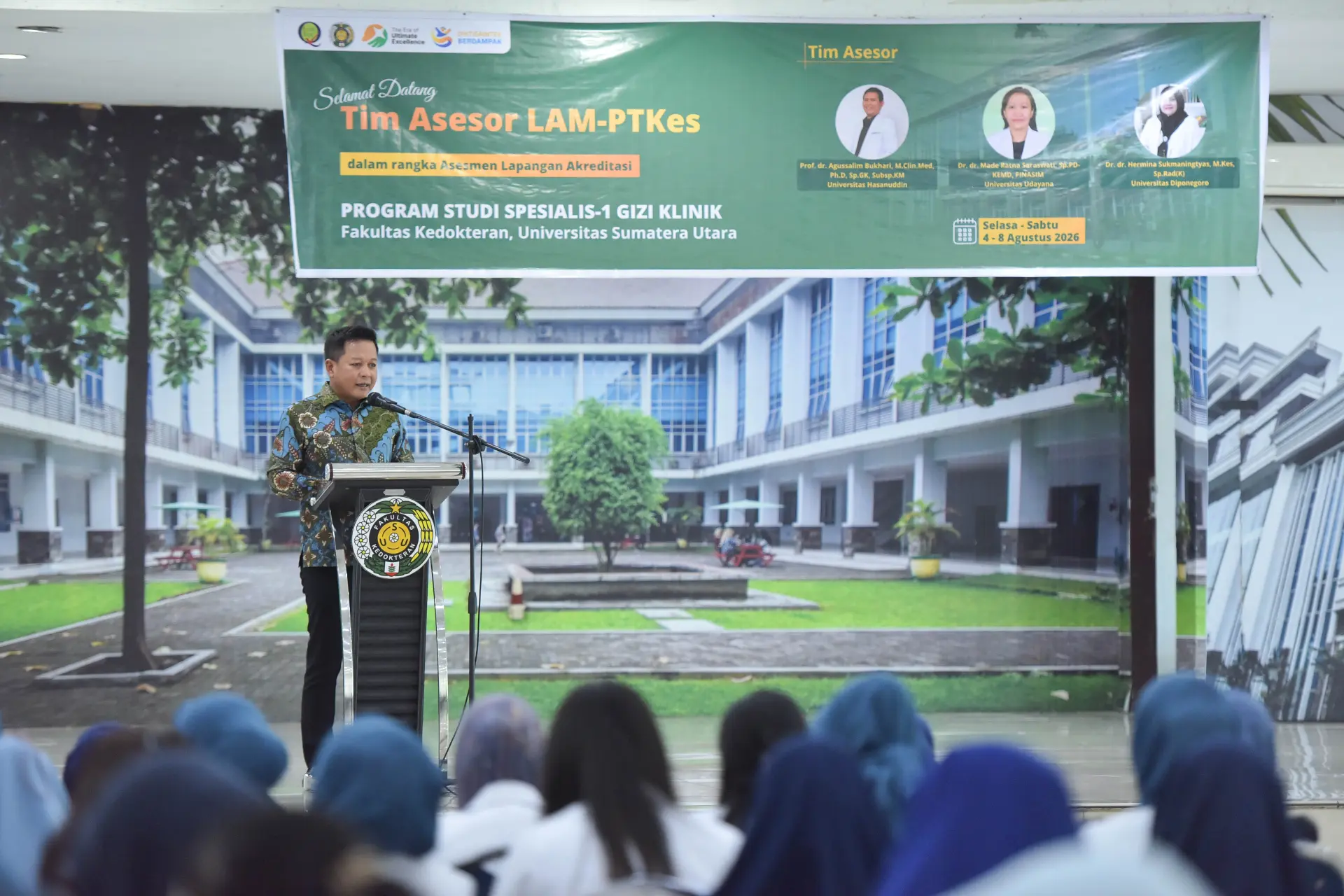
USU PUBLIC RELATIONS – The Indonesian Accreditation Agency for Higher Education in Health (LAM-PTKes) conducted an on-site accreditation assessment for the Clinical Nutrition Specialist Program (Sp-1) at the Faculty of Medicine, Universitas Sumatera Utara (FK USU). The assessment took place at the Faculty of Medicine Hall, 3rd Floor, on Wednesday (August 5, 2026).
In his opening remarks, USU Rector Prof. Dr. Muryanto Amin, S.Sos., M.Si., outlined three key priorities that currently guide the university's institutional development. First, USU has entered its third Strategic Plan (Renstra) period, with the primary focus on strengthening efficient institutional governance, covering the entire academic process from student admissions to graduation.
"Several study programs at USU have already obtained international accreditation. To support this achievement, the top priority in our annual work plan and budget allocation is strengthening institutional governance in an efficient manner," he said.
The Rector also emphasized the importance of effective human resource management, particularly in ensuring that faculty members' performance in the Tri Dharma of Higher Education—education, research, and community service—is properly documented, measurable, and reported in accordance with accreditation standards.
Regarding the Clinical Nutrition Specialist Program, the Rector described it as one of the Faculty of Medicine's flagship programs and a strategic priority. This aligns with the Indonesian government's focus on addressing nutrition-related issues and stunting, as well as supporting international collaborations such as the Erasmus program and strategic partnerships with institutions including the National Population and Family Planning Agency (BKKBN) and regional governments.
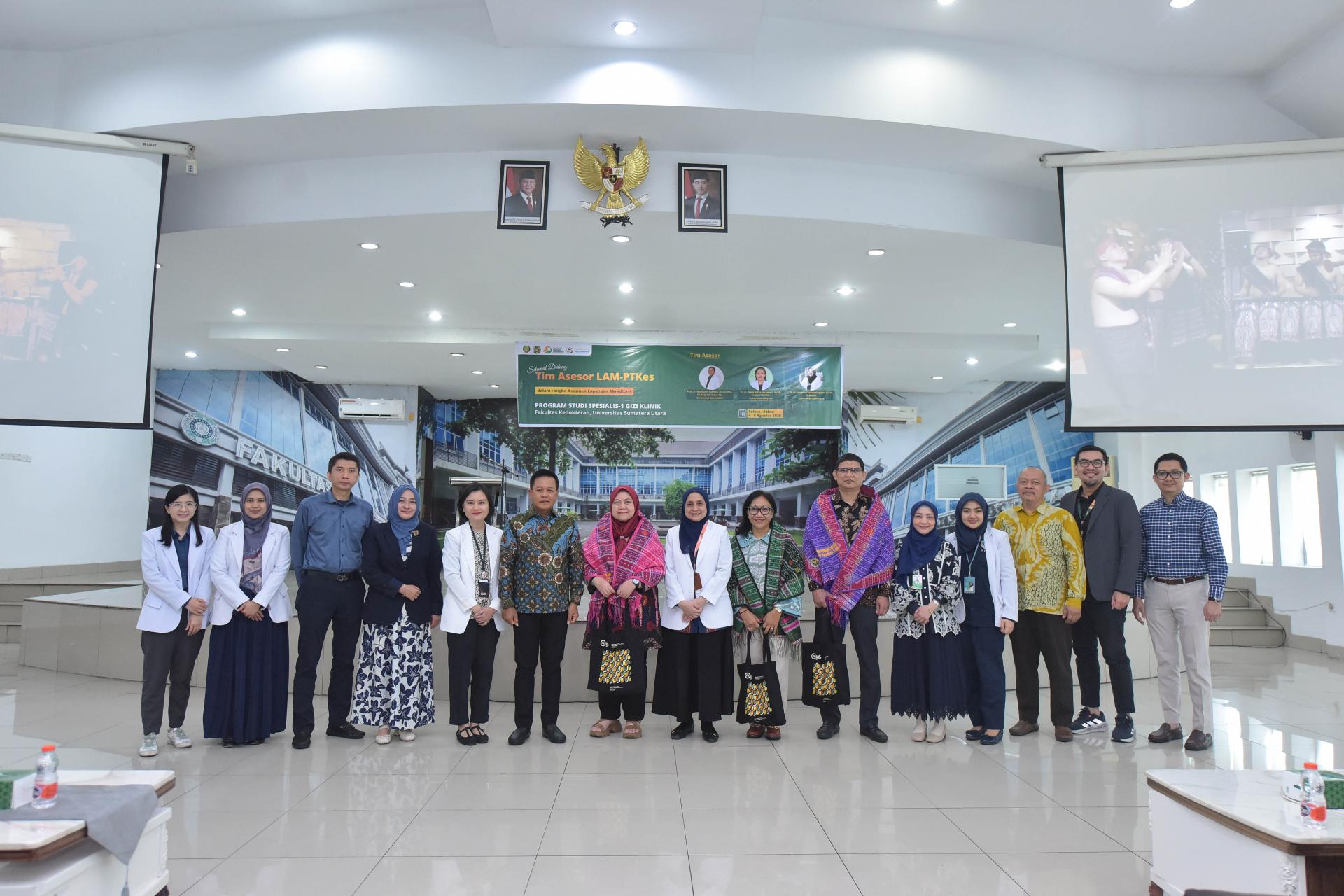
In accordance to these remarks, Prof. Dr. dr. Agus Salim Bukhari, M.Clin.Med., Ph.D., Sp.GK(K), Chair of the Assessor Team and Chair of the Indonesian College of Clinical Nutrition, explained that the primary objective of the on-site assessment is to verify the accuracy of the submitted data.
"We have completed the adequacy assessment and reviewed the Self-Evaluation Report. This visit aims to verify the submitted data through field triangulation, interviews, observation of facilities and infrastructure, and discussions with the task force team," he explained.
He added that transparency, open discussions, and full cooperation from the entire academic community of the Faculty of Medicine are essential to enable the assessors to conduct an objective evaluation.
During the visit, Prof. Agus also presented an overview of the development of Clinical Nutrition Specialist education in Indonesia, noting that the country currently has 10 educational centers offering the program. However, he emphasized that the number of graduates must continue to increase to meet national demand.
"The government's projection targets approximately 1,000 Clinical Nutrition Specialists. At present, only 677 specialists have graduated, and only three main centers have produced graduates. Ideally, every hospital should have at least one Clinical Nutrition Specialist. With more than 3,000 hospitals across Indonesia, the demand for these specialists remains substantial," he said.
He expressed hope that newer education centers, including Universitas Udayana, Universitas Sumatera Utara (USU), Universitas Andalas (UNAND), and Universitas Syiah Kuala (USK), will soon contribute significantly to meeting the nationwide need for Clinical Nutrition Specialists within the next 1.5 to 2 years.


