

FP USU Supports Economic Recovery and Livestock Feed Resilience in Langkat Following Disaster


FP USU Supports Economic Recovery and Livestock Feed Resilience in Langkat Following Disaster
Published by
Raisha Andini
Published at
Monday, 14 September 2026


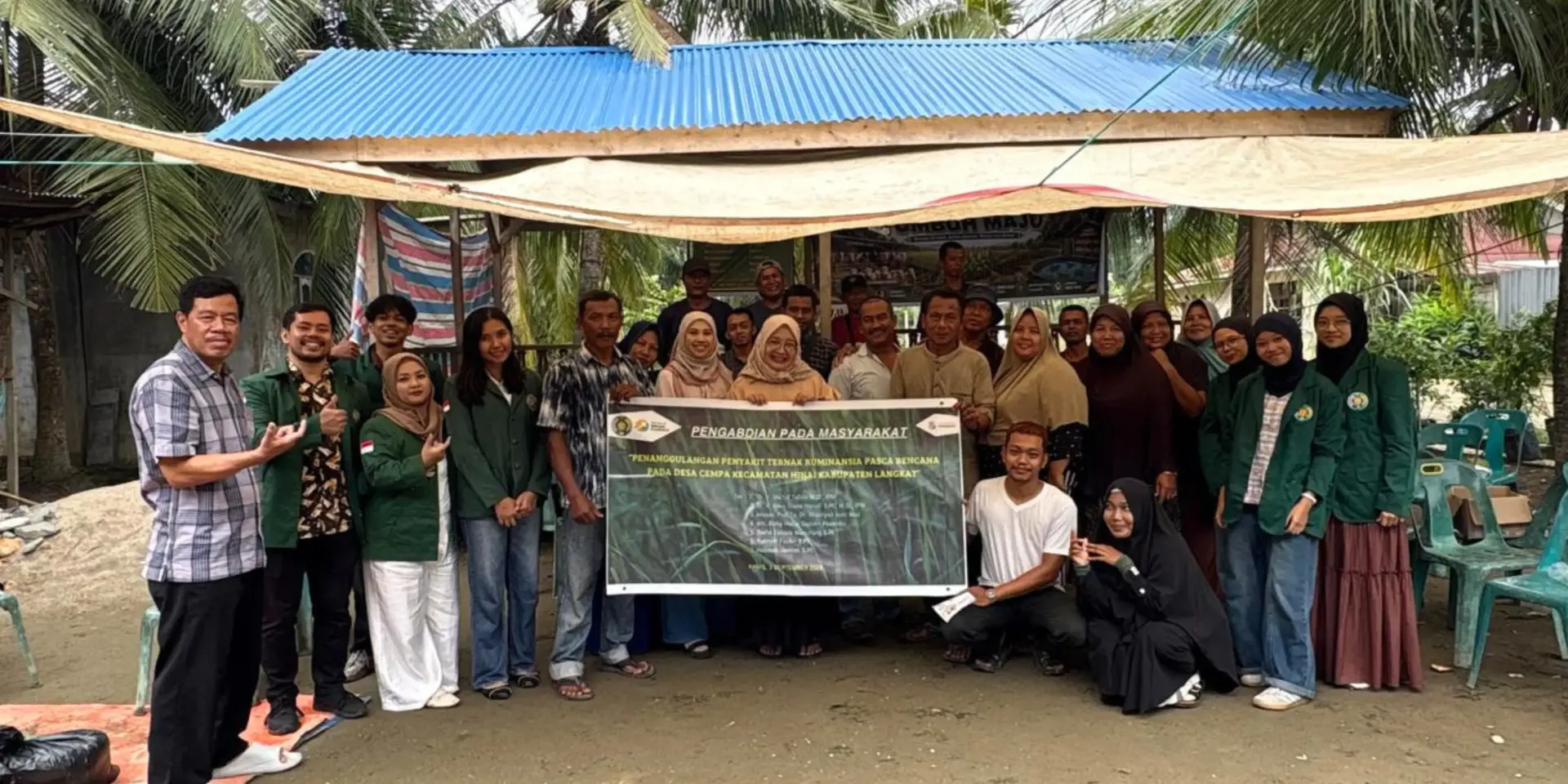
Langkat, September 3, 2026 — The Faculty of Agriculture of Universitas Sumatera Utara (FP USU), through its community service team, implemented a program entitled “Economic Recovery and Livestock Feed Resilience in Langkat Regency Following the Disaster through Training on Rations Based on Fermented Palm Oil Waste Using Local Microorganisms” on Thursday, September 3, 2026. The program was held in Cempa Village, Hinai District, Langkat Regency, as part of efforts to support community recovery following the floods.
The community service program was carried out by a team consisting of Dr. Ir. Nevy Diana Hanafi, S.Pt., M.Si., IPM., Ir. Achmad Sadeli, S.Pt., M.Si., IPM., Dr. Ir. Ma’ruf Tafsin, M.Si., IPM., and Assoc. Prof. Ts. Dr. Khairiyah binti Mad, with the participation of students from the Undergraduate Animal Science Study Program and the Master’s Program in Animal Science, Faculty of Agriculture, USU.
The program focused on helping communities recover their economic conditions while maintaining the sustainability of livestock farming following the disaster. One of the challenges faced by farmers after the floods was the availability of feed, which can affect the continuity of livestock production and household income.
Through training and outreach activities, community members were provided with knowledge and practical skills in processing and fermenting palm oil waste using local microorganisms. Previously underutilized palm oil waste was processed into a more nutritious feed ingredient that can serve as an alternative source of livestock feed.
The utilization of palm oil waste as a feed ingredient also forms part of efforts to promote the implementation of circular economy principles at the community level. In addition to helping reduce waste, this processing approach has the potential to lower feed costs and create opportunities for developing businesses based on locally available resources.
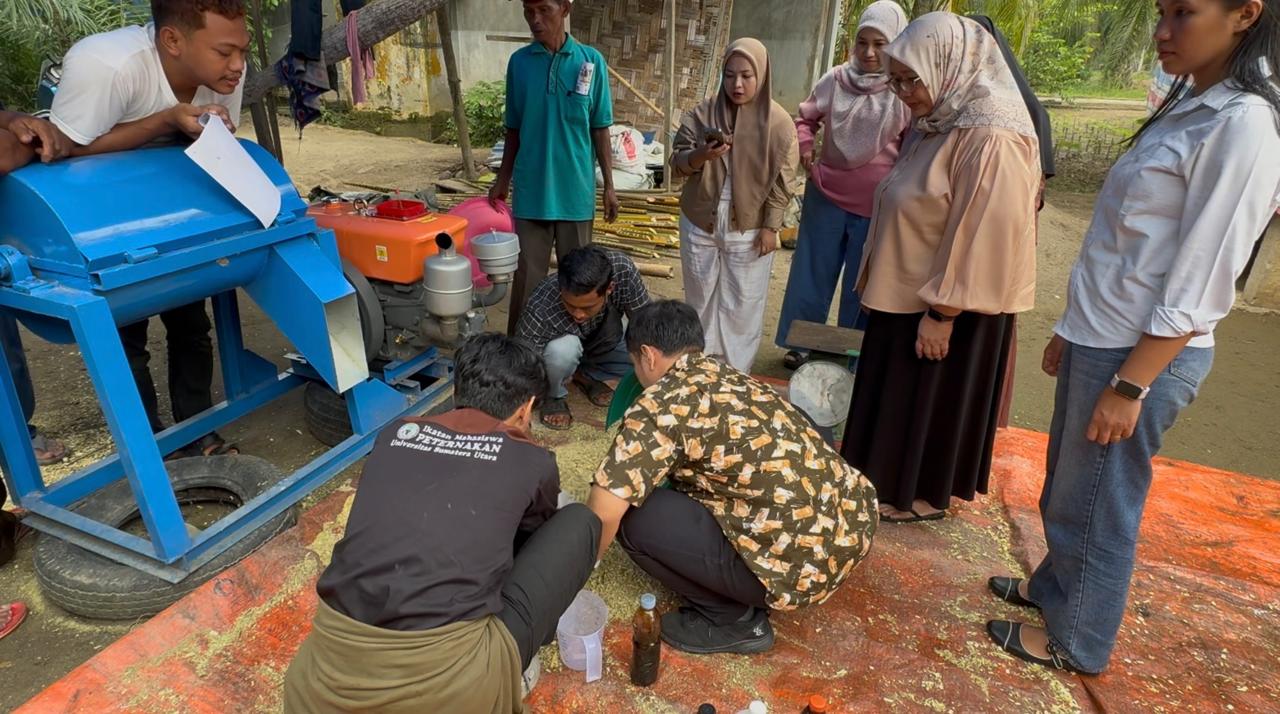
The program is expected to enhance the community’s capacity to manage available resources in their surroundings productively and sustainably. With the feed-processing skills they acquire, community members are expected to have an alternative means of maintaining the continuity of their livestock businesses while strengthening household economic resilience following the disaster.
The implementation of this program is aligned with the Sustainable Development Goals (SDGs), particularly SDG 1 (No Poverty) through support for community economic recovery; SDG 2 (Zero Hunger) through strengthening food and livestock feed resilience; SDG 8 (Decent Work and Economic Growth) through the development of business opportunities based on local potential; and SDG 12 (Responsible Consumption and Production) through the utilization of palm oil waste as a valuable feed resource.
Through community service activities such as this program, FP USU continues to promote the application of knowledge and innovation to address real-world challenges in society, while strengthening the university’s contribution to building resilient, self-reliant, and sustainable communities.


