

University News

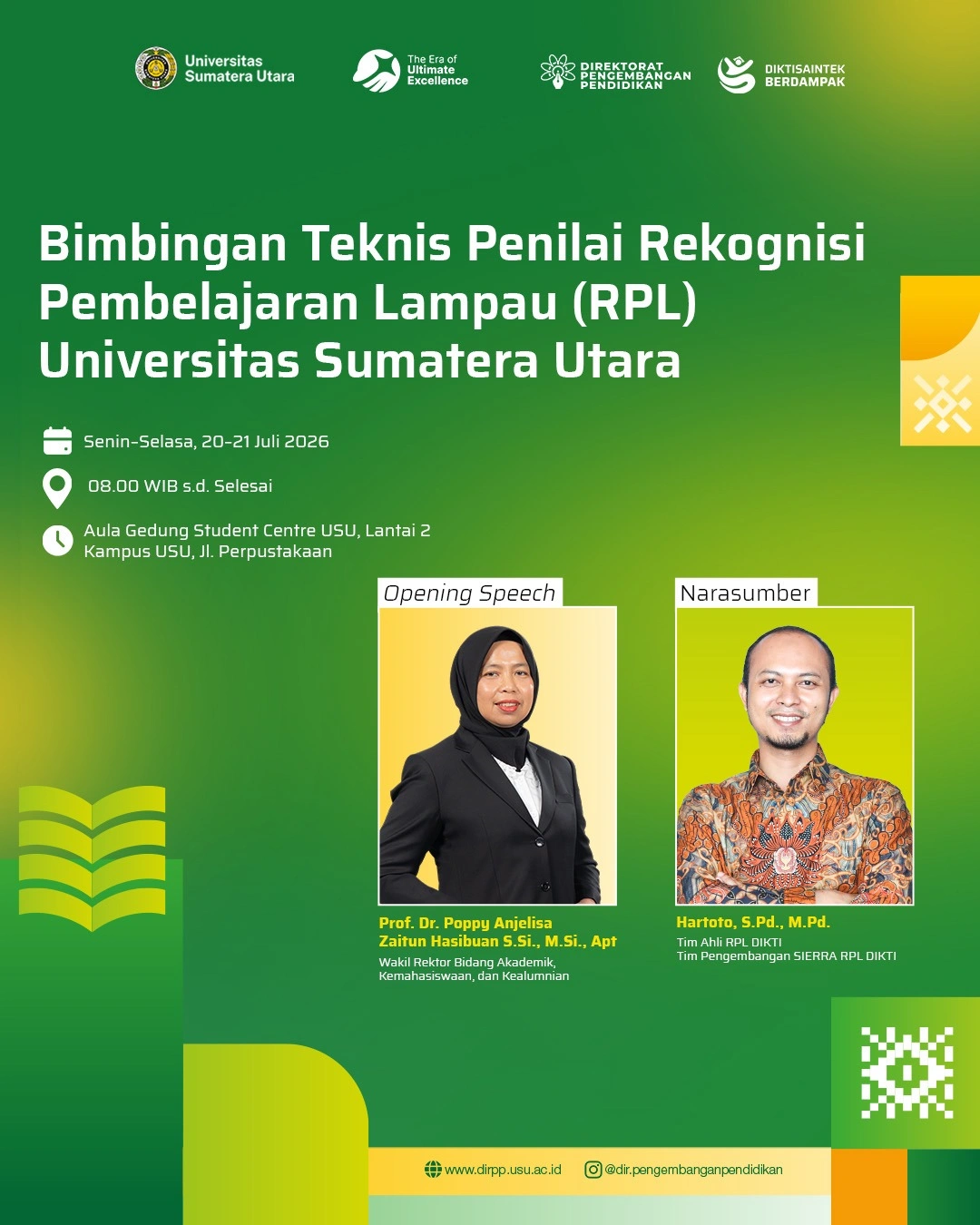
USU Conducts Technical Training for Recognition of Prior Learning (RPL) Assessors
Rekognisi Pembelajaran Lampau (RPL) merupakan bentuk pengakuan terhadap pengetahuan dan keterampilan yang telah dimiliki seseorang sebelumnya. Kemampuan tersebut dapat diperoleh melalui pendidikan formal, pelatihan, kursus, kegiatan pembelajaran lainnya, maupun pengalaman kerja. RPL hadir untuk membuka kesempatan yang lebih luas bagi masyarakat agar tetap dapat melanjutkan pendidikan tinggi meskipun sebelumnya terkendala pekerjaan, waktu, biaya, atau kondisi lainnya.
21 July 2026
Lessons from Europe’s Heatwave: Traditional Batak Houses Prove Zero-Carbon Architecture Already Existed
The extreme heatwave that hit Europe in June–July 2026 underscored the flaws of post-World War II modernist architecture. According to Dr. Ir. Ar. Achmad Delianur Nasution, a lecturer in Architecture at USU's Faculty of Engineering, Indonesia has actually had the solution for hundreds of years, one example being the traditional architecture of Batak indigenous houses, which applies zero-carbon principles through natural materials as well as natural lighting and ventilation.
21 July 2026
Total 2 data
Explore


