

USU Rector: Graduate Education Plays a Strategic Role in Strengthening Indonesia’s Research and Innovation Capacity


USU Rector: Graduate Education Plays a Strategic Role in Strengthening Indonesia’s Research and Innovation Capacity
Published by
Raisha Andini
Published at
Friday, 28 August 2026


“Innovation requires a strong research ecosystem. Innovation also requires the development of human resources at the master’s and doctoral levels,” said the Rector.
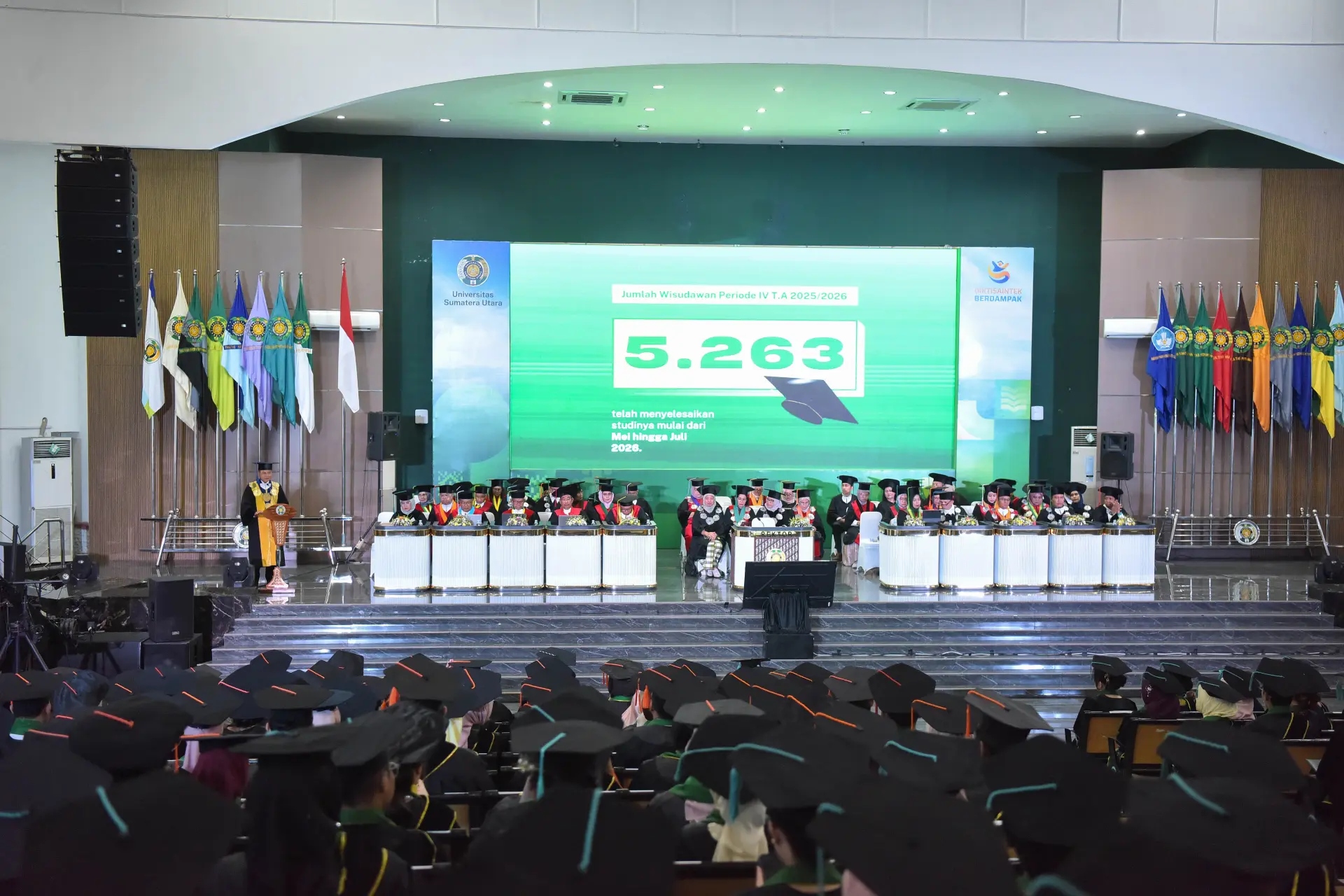
USU PUBLIC RELATIONS – Rector of Universitas Sumatera Utara (USU), Prof. Dr. Muryanto Amin, S.Sos., M.Si., emphasized the importance of graduate education in strengthening Indonesia’s human resource capacity, research, and innovation. He made the statement during the Period IV Graduation Ceremony of the 2025/2026 Academic Year, held at the USU Auditorium from Wednesday to Friday (August 26–28, 2026).
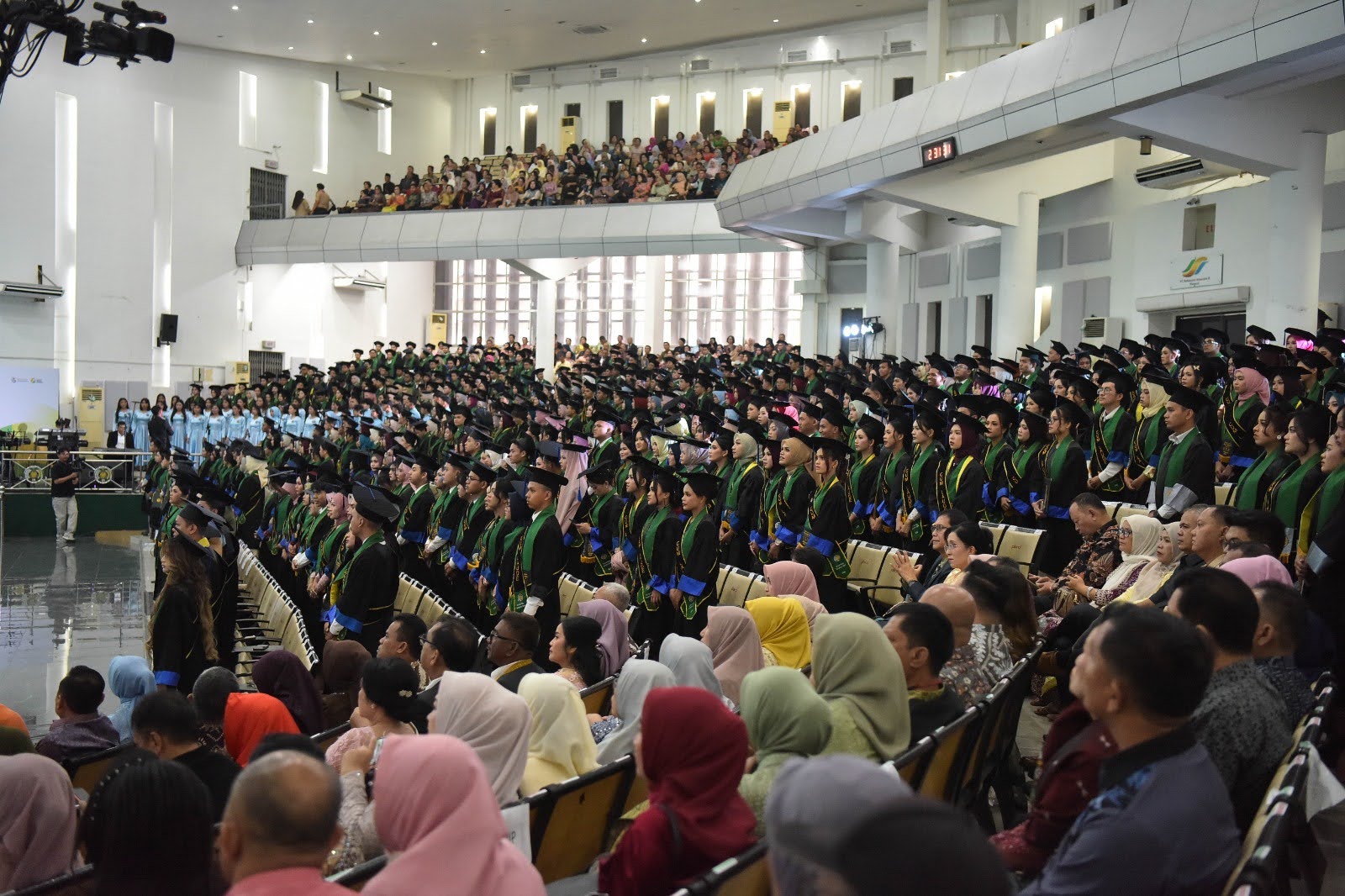
Speaking under the theme “The Strategic Position of Graduate Education for Indonesia’s Advancement: Becoming Problem Solvers in an Era of Complexity,” the Rector explained that the need for human resources with advanced knowledge and research capabilities is becoming increasingly important as development becomes more dependent on knowledge, science, and technology. Graduate education not only produces graduates with higher academic qualifications but also strengthens their capacity to generate new knowledge and innovations.
Post Graduate Education Strengthens Research and Innovation Capacity
The Rector explained that doctoral education prepares human resources to lead research and become part of the skilled workforce in a knowledge-based economy. Meanwhile, master’s education expands the pool of advanced-level talent needed to support research and innovation.
This is also reflected in data from the Organisation for Economic Co-operation and Development (OECD), which shows an increase in the average proportion of doctoral degree holders among the working-age population in OECD countries, from approximately 0.9 percent in the early 2000s to 1.3 percent in 2020. In Switzerland, the proportion has even exceeded 3 percent, while Indonesia remains below 0.2 percent.
According to the Global Innovation Index 2025, Switzerland ranked first globally in innovation, China ranked 10th, while Indonesia ranked 55th out of 139 countries.
According to the Rector, the number of graduate degree holders is not the only measure of a country’s progress. However, a strong innovation ecosystem requires human resources with advanced research capabilities and knowledge.
“Innovation requires a strong research ecosystem. Innovation also requires the development of human resources at the master’s and doctoral levels,” said the Rector.
Post Graduate Education as the Nation’s Knowledge Infrastructure
The challenges faced by society and the nation are becoming increasingly complex, requiring human resources who can think deeply, work based on evidence, and connect knowledge across different disciplines.
According to the Rector, these capabilities are developed throughout graduate education. In preparing theses, dissertations, and other academic works, students become accustomed to formulating problems, developing research questions, critically examining existing knowledge, analyzing data, testing assumptions and ideas, and taking responsibility for the conclusions they reach.
Graduate education is regarded as a form of knowledge infrastructure that can strengthen Indonesia’s capacity to conduct research, develop science and technology, generate innovation, and independently address complex challenges. The Rector encouraged the master’s and doctoral graduates to take a greater role in advancing knowledge and contributing to national development.
“Do not merely become consumers of knowledge; take part in expanding knowledge. Do not merely become users of technology; develop and direct it further. Do not merely observe the nation’s challenges; take part in providing solutions,” the Rector urged.
Graduates Are Expected to Make a Meaningful Contribution to Society
These achievements are part of USU’s efforts to maintain the quality of education while ensuring that the degrees earned by its graduates remain relevant amid changing times. However, the Rector emphasized that the university’s reputation is ultimately built not only through institutional achievements but also through the work, integrity, and contributions of its alumni.
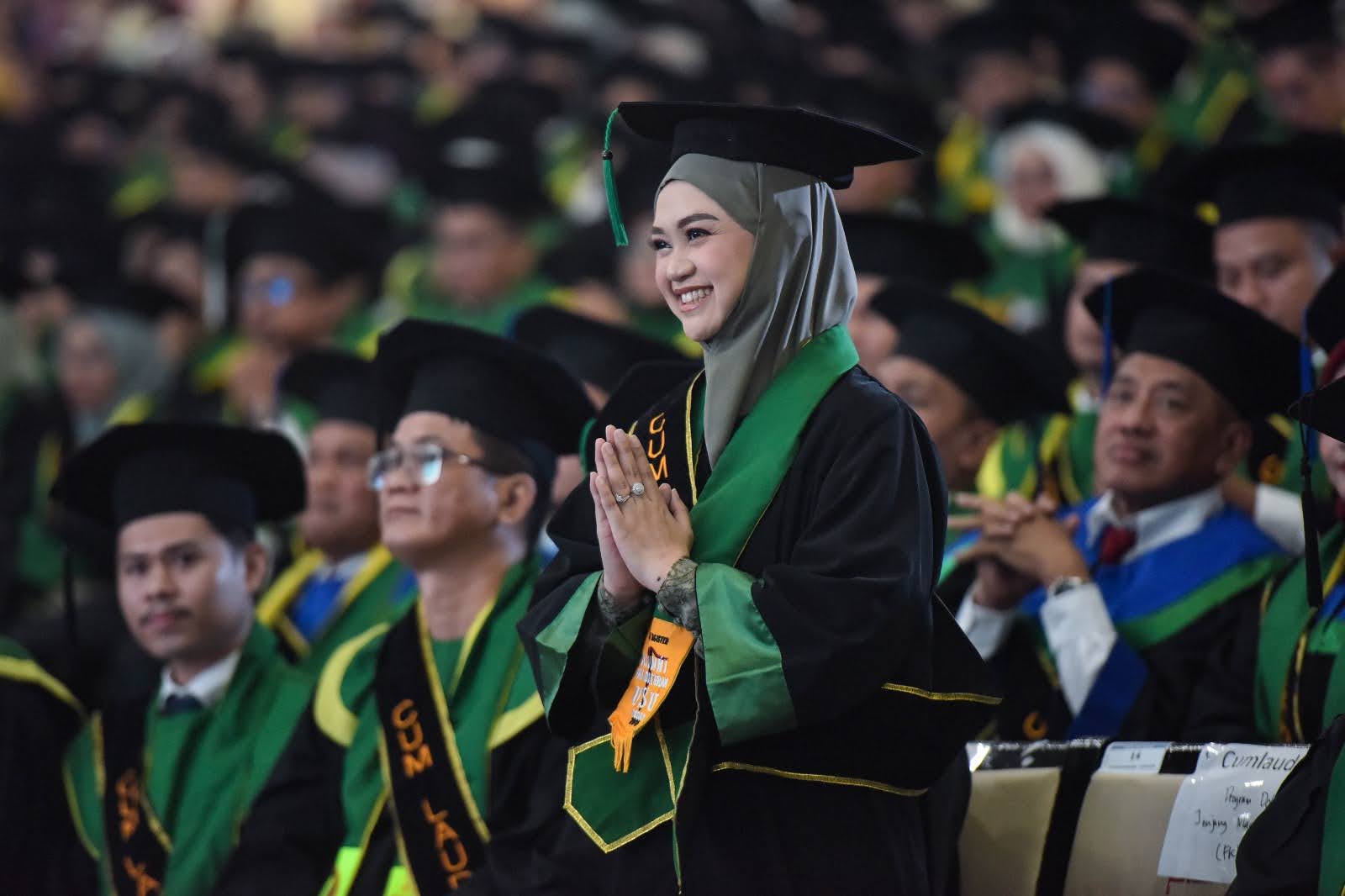
Addressing the graduates, the Rector encouraged them to continue learning and adapting after completing their education. He reminded them that their post-graduation journey may not always begin from a prominent position, but the abilities, integrity, and contributions they build consistently will determine their future paths.
“Competence, integrity, and contribution will determine the journey of all of you,” the Rector concluded.
The Rector also encouraged the graduates to continue developing their leadership, knowledge, and competencies so that the knowledge they acquired at USU can benefit humanity and contribute to the nation’s advancement. He further reminded the graduates to appreciate the sacrifices of their parents, families, and everyone who supported their educational journey, and to uphold the good name of their families and alma mater.


