

CEDMA Psychology USU Summer Course 2026 Strengthens Local Wisdom-Based Disaster Mitigation
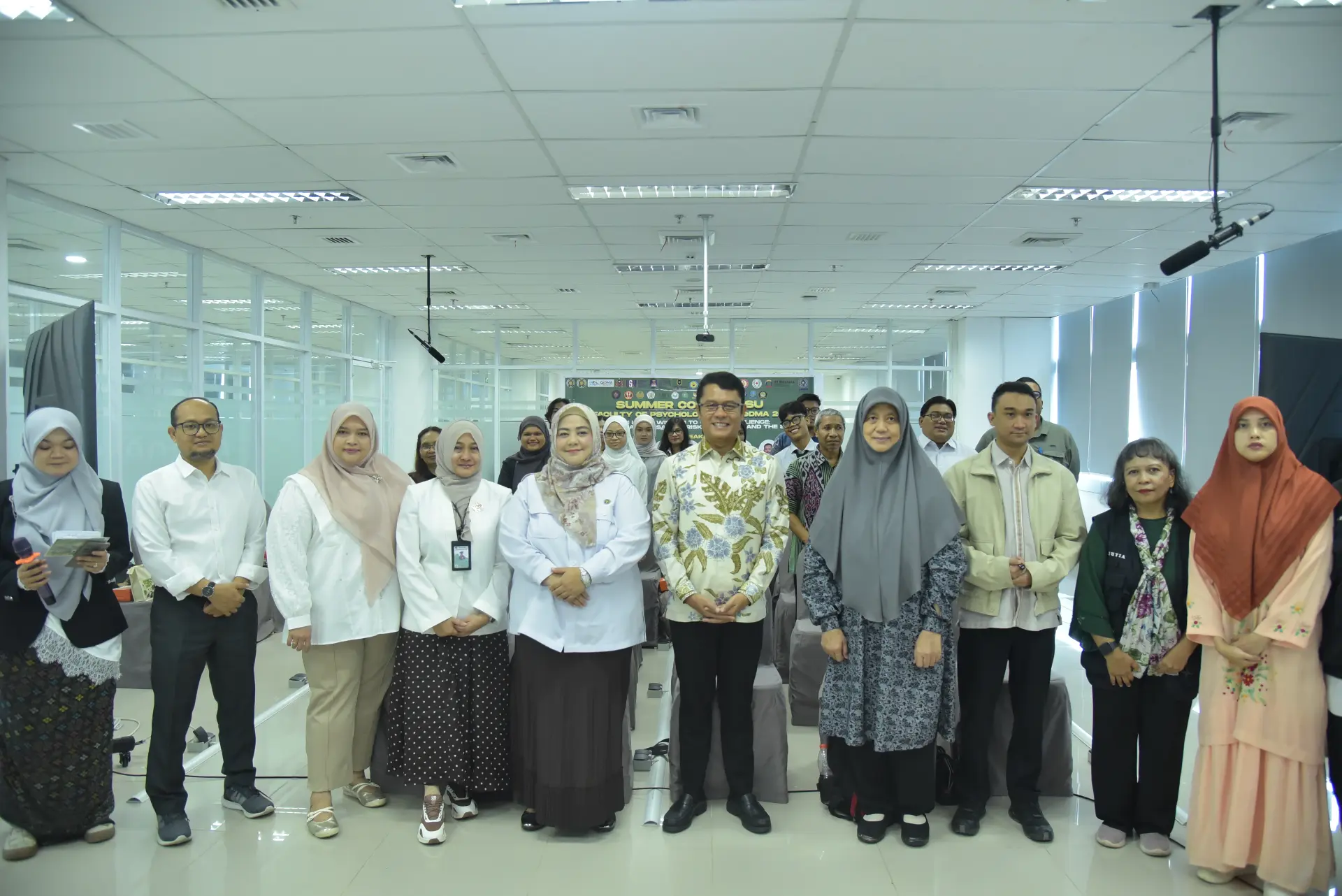


CEDMA Psychology USU Summer Course 2026 Strengthens Local Wisdom-Based Disaster Mitigation
Published by
Raisha Andini
Published at
Monday, 26 October 2026


Vice Rector for Research, Innovation, and Cooperation of USU, Prof. Dr. Eng. Himsar Ambarita, S.T., M.T., said that the Summer Course is one of USU’s efforts to strengthen community preparedness for disasters through collaboration and knowledge exchange.
USU PUBLIC RELATIONS – Universitas Sumatera Utara (USU), through the Faculty of Psychology and the Center for Disaster Management and Applied Psychology (CEDMA), held the 2026 Summer Course on Monday (October 26, 2026), at the USU DLCB Building. The program served as a platform for international learning and knowledge exchange aimed at strengthening community-based disaster risk reduction through the integration of local wisdom, scientific approaches, and modern mitigation technologies. The event was held in a hybrid format and attended by participants from various countries.
Vice Rector for Research, Innovation, and Cooperation of USU, Prof. Dr. Eng. Himsar Ambarita, S.T., M.T., said that the Summer Course is one of USU’s efforts to strengthen community preparedness for disasters through collaboration and knowledge exchange. He noted that disaster experiences in various regions, including North Sumatra, demonstrate the importance of community preparedness and support from various stakeholders in reducing disaster risks and impacts.
“Future progress can be achieved through knowledge sharing, sustainable collaboration, and the ability to build networks. We want to create added value through cooperation that generates tangible impacts, particularly in disaster management and risk reduction,” he said.
Dean of the USU Faculty of Psychology, Prof. Dr. Vivi Gustini Rahmadani, also emphasized that disaster management requires the involvement of multiple disciplines and cannot be addressed in isolation. According to her, collaboration among academics, researchers, students, practitioners, and communities is essential to developing more comprehensive approaches to disaster risk reduction.
“Psychology cannot work alone in addressing disasters. Collaboration with various fields, such as technology, agriculture, medicine, social sciences, artificial intelligence, and economics, is necessary,” she explained.
Chair of the 2026 Summer Course Committee, Dr. Meutia Nauly, explained that the program aims to broaden the international academic perspectives of the USU academic community on Community-Based Disaster Risk Reduction. The program integrates local wisdom, scientific approaches, modern mitigation technologies, and the achievement of the Sustainable Development Goals (SDGs).
“The main objective of this program is to broaden international academic perspectives and experiences in community-based disaster risk reduction. We also want to facilitate students, lecturers, academics, and international professionals in exchanging knowledge and developing cross-disciplinary and cross-cultural collaborations,” she said.
She noted that the 2026 Summer Course was attended by 161 participants from 12 countries: Afghanistan, Bangladesh, the Philippines, Malaysia, Mali, Nepal, Nigeria, Pakistan, Thailand, Timor-Leste, Yemen, and Indonesia. The program was designed to include not only lectures and discussions but also group assignments that encouraged participants to analyze disaster-related issues based on experiences and conditions in their respective countries.
“My hope is that this activity will not merely become a space for lectures and question-and-answer sessions, but also foster networks among participants. Through group discussions and assignments, they can examine differences in experiences, identify gaps, and formulate measures that can be taken to address disaster-related challenges,” she explained.
Furthermore, she emphasized that the impact of the Summer Course is expected to continue beyond the completion of the program. Through connections with partner villages, educational activities, research, and community service initiatives are expected to continue sustainably.
“We want to integrate the local wisdom possessed by communities with available technologies to help improve their quality of life. We hope communities will become more self-reliant in disaster mitigation, adapt to the conditions they face, and build better lives,” she added.
Through the implementation of the CEDMA Psychology USU Summer Course 2026, USU is expected to strengthen its international academic network while promoting the application of knowledge in disaster risk reduction efforts. Collaboration among higher education institutions, government, practitioners, and communities is an important step toward developing sustainable, locally responsive disaster solutions that support the achievement of the SDGs.


